What should I do if a home I am buying has Kitec plumbing?
Most of what is written about this is about getting paid. That part is finished. What is left is a condition question, and it is answered during the condition period or not at all.
The short answer
Robin Patel, a REALTOR® in the Greater Toronto Area, explains that Kitec is a plumbing system prone to premature failure, and that the class action settlement which once compensated owners closed to new claims on 9 January 2020. A buyer today inherits the replacement cost, so it belongs in the price rather than in a claim.
Written forBuyers in the GTA looking at condominiums and homes built or plumbed from the mid-nineties onward, and owners who have just found out what the pipe in their utility closet is.
The short version
- Kitec was sold under several names, including PlumbBetter, IPEX AQUA, WarmRite and others, and the official list is not exhaustive.
- The settlement administrator states the claim filing deadline was 9 January 2020 and that claims made after it are rejected. Remaining funds were returned to the funding entities.
- Because the compensation route is closed, the cost of replacement sits with whoever owns the property, which makes it a pricing question rather than a claim.
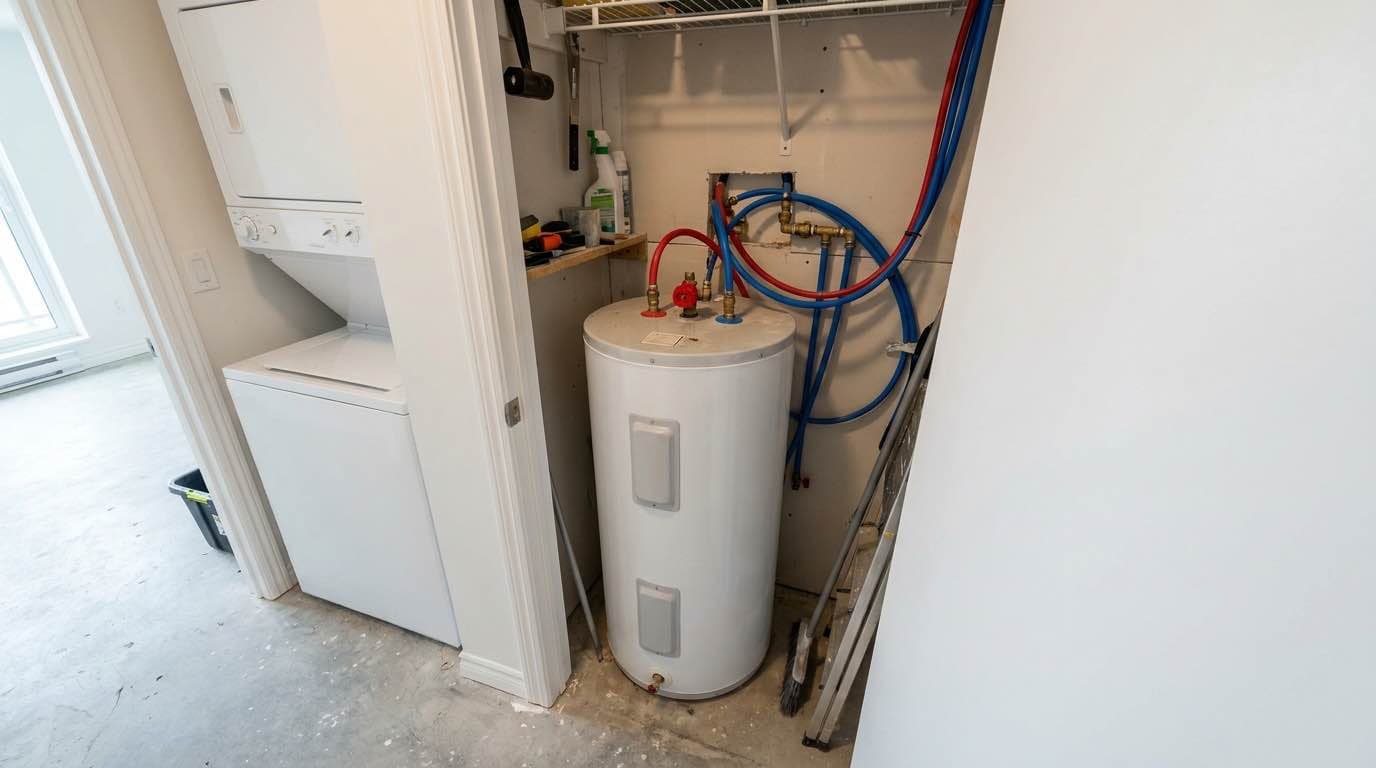
- The pipe is typically blue for cold and orange for hot, with fittings marked Kitec or KTC, and the place to look first is near the hot water tank.
- Where a previous owner filed a claim under the settlement, the administrator states they must tell a buyer that they filed and what the release says.
What it is, and the names it was sold under
Kitec is a plumbing system that used flexible pipe with metal fittings, and it has a reputation for failing earlier than plumbing is supposed to. The difficulty for a buyer is that it was not only sold as Kitec.
The settlement administrator lists it under several names — PlumbBetter, IPEX AQUA, WarmRite, Kitec XPA, AmbioComfort, XPA, KERR Controls and Plomberie Améliorée among them — and ends that list with the words or otherwise. So a system can be the same product under a name nobody recognises, which is why identifying it by sight matters more than asking what brand it is.
It is not confined to condominiums, but condominiums are where it causes the most argument, because a failure inside one unit becomes everybody's problem and the repair sits across the boundary between unit and common element.
a system can be the same product under a name nobody recognises
The compensation route is closed
This is the part most pages about Kitec have not caught up with. There was a class action settlement, it did pay owners, and it is finished. The administrator states that the claim filing deadline was 9 January 2020 and that claims made after that date are rejected.
Its own site now describes the case as being in the administration stage, records the final plan of allocation as approved by the courts in Ontario, Quebec and the United States, and reports that payments were issued and the stale date has passed. It also states that funds left over after valid claims were paid go back to the funding entities rather than sitting in a pool for latecomers.
So an owner who discovers Kitec today has no claim to make. That single fact reorganises the whole question, because it moves the cost from somebody else to whoever owns the property.
an owner who discovers Kitec today has no claim to make
How to find it before the condition period ends
The administrator gives plain identification guidance, and it is worth following rather than relying on a seller's answer. The pipe is typically blue for cold water and orange for hot. Where the fittings are visible, look for the words Kitec or KTC on them.
The best places to look are near the hot water tank, or in the mechanical room where the pipe connects to or exits the walls, and under kitchen sinks or bathroom vanities where pipe and fittings come through. In an apartment that usually means one utility closet, which takes a minute to open.
There are also signs of a system already in trouble. The administrator describes a buildup of white residue on the outside of a fitting as the first sign of failure there, and a blackening or bulging of the pipe as the first sign in the pipe itself, with problems typically appearing first near the hot water tank.
In an apartment that usually means one utility closet, which takes a minute to open.
What it changes about the purchase
Finding it is not a reason to walk away on its own. It is a reason to know what replacement involves in that specific building before the conditions come off, because the answer differs enormously between a detached house and a unit on the fifteenth floor of a tower.
For a condominium the question is not only what it costs you but what the corporation has decided. That is what the status certificate and the reserve fund study are for, and reviewing them is the step where this either becomes a manageable number or a reason to reconsider.
Insurance is worth a direct question rather than an assumption. Ask your own broker what they do with this system in this building, and get the answer before the conditions are waived rather than after, because it is the kind of thing that is discovered at renewal.
Finding it is not a reason to walk away on its own.
If you are selling a home that has it
There is one point here that almost nobody knows, and it comes from the administrator rather than from folklore. Where an owner filed a claim under the settlement, the administrator states that they must advise potential buyers and subsequent owners that a claim was filed and what the terms of the release are.
Separately from that, the administrator says the law on disclosing the system itself varies by province and that a seller in this position should consult a real estate lawyer. That is the honest answer: it is a legal question with a provincial answer, not a rule of thumb.
What is clear either way is that this is not a detail to leave until an inspector raises it. A buyer who finds it themselves late in a transaction renegotiates from a stronger position than one who was told early.
it is a legal question with a provincial answer, not a rule of thumb
Written by
Robin PatelSalesperson · The Agency Toronto
Updated
Published
Read in your language
A machine translation, not Robin’s words. For anything that decides money, ask him in Gujarati or Hindi directly.