Do I qualify for Ontario's enhanced HST rebate on a new home?
The relief turns on a signature, not a closing. A buyer taking occupancy in 2029 can still qualify, and a buyer who signs a week late cannot — which makes the date on the builder's paper the most expensive line in it.
The short answer
Ontario's enhanced new housing rebate is triggered by the day you sign the builder's agreement of purchase and sale, not the day you close, and the window runs to 31 March 2027. You do not have to be a first-time buyer. Robin Patel, a REALTOR® in the Greater Toronto Area, checks that date on every pre-construction deal.
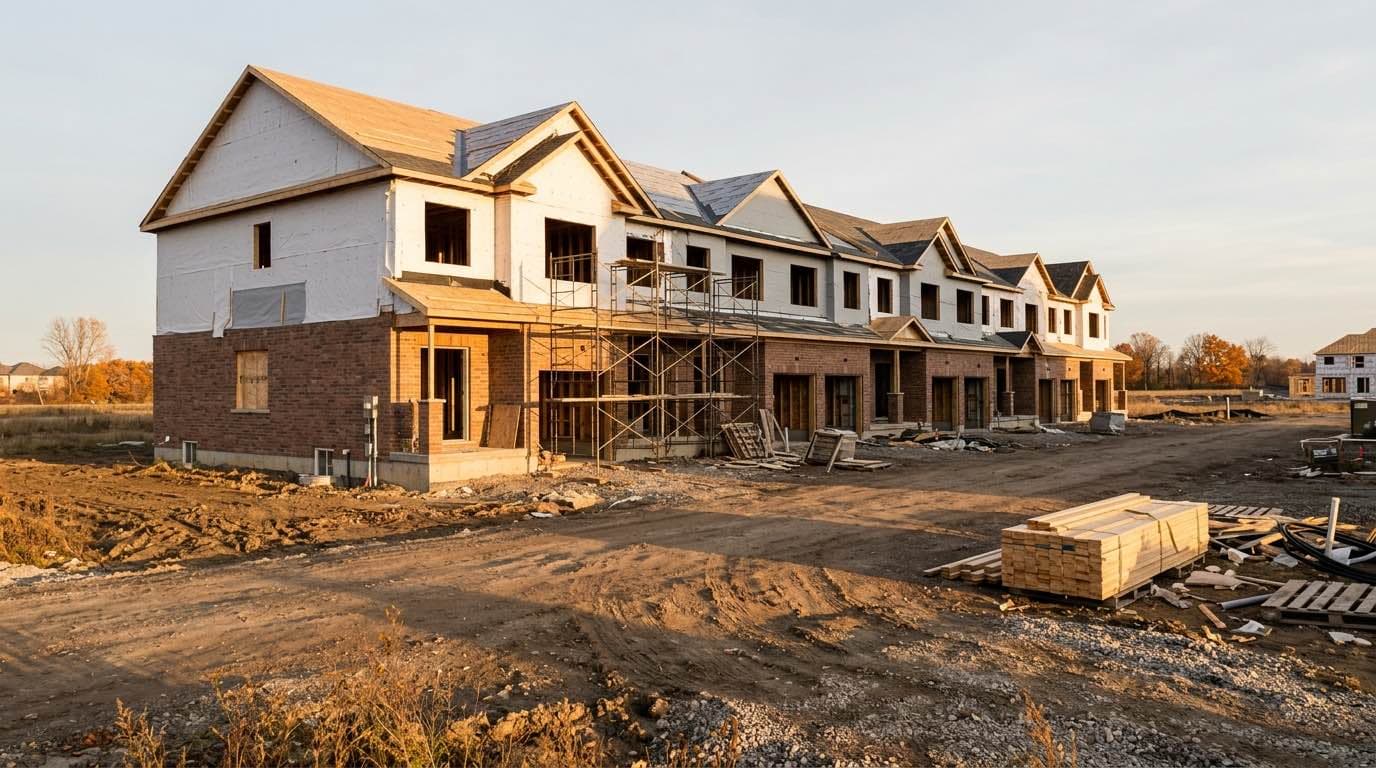
Written forBuyers signing builder agreements on pre-construction towns, stacked towns and condominiums across Brampton, Mississauga and Milton — including anyone who assumed this relief was for first-time buyers only.
The short version
- The date that decides the enhanced rebate is the date on the agreement of purchase and sale, not the closing date or the occupancy date.
- The window closes on 31 March 2027, and a pre-construction purchase signed inside it can still close years later.
- You do not have to be a first-time buyer. That condition belongs to a different measure, and conflating the two is the most common error on this subject.
- The home has to be intended as a place of residence for you or a relation, which is what separates this from an investment purchase.
- On a builder purchase the rebate is normally credited on the statement of adjustments rather than claimed by you afterwards, so the builder's paperwork has to be right.
Which date decides it — the day you sign, or the day you close?
A pre-construction purchase has two dates that matter to a buyer, and they can be years apart. There is the day you sign the builder's agreement of purchase and sale, and there is the day the deal finally closes and title moves to you.
For this relief the first date is the one that counts. A buyer who signed inside the window and closes long afterwards is inside it. A buyer who closes next month on paper signed before the window opened is outside it, and nothing about the closing changes that.
This is the opposite of how most closing costs behave. Land transfer tax, the adjustments, the lawyer's account: those all attach to the closing. A buyer who assumes this one works the same way can sign a week late and never know what it cost.
A buyer who assumes this one works the same way can sign a week late and never know what it cost.
Do you have to be a first-time buyer?
No, and this is where most of the confusion on the subject comes from. There is a separate federal measure aimed specifically at first-time buyers of new homes, and because the two arrived close together they are routinely described as one thing.
They are not. The enhanced provincial rebate is not limited to buyers who would qualify as first-time, which means a move-up buyer purchasing a new home to live in is not excluded from it on that ground alone.
Robin Patel works through which of the two a particular purchase engages, because the answer changes what the builder should be crediting and what the lawyer should be checking before closing.
because the two arrived close together they are routinely described as one thing
What the relief requires you to do with the home
The home has to be intended as a place of residence for you or for a relation. That is the condition that does the real work, because it is the one that separates a family buying a town to live in from an investor buying the identical town to rent out.
An investor is not simply refused and sent away — there is a different path in the legislation for a new home bought to be rented. But it is a different claim with different conditions, and it is not the one this page is about.
If the plan is genuinely undecided at signing, that is worth saying out loud to the lawyer before the agreement is firm rather than after, because the intention at the time of the purchase is what the claim rests on.
it is the one that separates a family buying a town to live in from an investor buying the identical town to rent out
Who actually claims it — you, or the builder?
On a straightforward purchase from a builder the rebate is normally handled as a credit on the statement of adjustments. You do not pay the full tax and then apply to get part of it back; the builder reduces what you owe on closing and recovers it themselves.
That is convenient and it is also where it goes wrong. The credit depends on paperwork the builder prepares and on a certification you sign, and if the forms are not right the credit can be reversed afterwards and come back to you as a demand.
So the question to ask is not only whether you qualify. It is whether the builder is crediting it, what you are signing to confirm it, and what happens if the claim is later disallowed. Those answers belong in the agreement, not in an email.
You do not pay the full tax and then apply to get part of it back
What to establish before the agreement is firm
A pre-construction buyer has a short window in which questions are still cheap, and it closes when the agreement does. The points below are the ones that decide whether this relief is actually available on the purchase in front of you.
- What date will appear on the executed agreement of purchase and sale, and is it inside the window?
- Is the home intended as a residence for you or a relation, and does the agreement say anything inconsistent with that?
- Is the builder crediting the rebate on closing, or is this a claim you make yourself afterwards?
- What is the construction and completion timing in the agreement, and does it sit inside what the relief requires?
- Has the lawyer reviewed the rebate wording specifically, rather than the agreement generally?
Written by
Robin PatelSalesperson · The Agency Toronto
Updated
Published
Read in your language
A machine translation, not Robin’s words. For anything that decides money, ask him in Gujarati or Hindi directly.