What happens to a rented water heater when I buy the house?
The equipment is in the basement and the contract is in the paperwork. One of them transfers with the house and the other one has to be negotiated, and a law change in 2024 moved only part of the problem.
The short answer
A rented water heater or furnace comes with a contract that has to be dealt with before closing: assumed by the buyer, or bought out by the seller. Since June 2024 the notice that used to sit on title for these rentals can no longer be registered. Robin Patel, a REALTOR® in Brampton, settles this at the offer stage.
Written forBuyers and sellers in the GTA who have found a rented water heater, furnace or air conditioner attached to the property, and anyone who saw a notice registered on title and did not know what it was.
The short version
- Establish early whether the water heater, furnace and air conditioner are owned or rented, because a rented one carries a contract and an owned one does not.
- Whether the buyer assumes the contract or the seller buys it out is negotiated in the offer. There is no default that applies automatically.
- The Homeowner Protection Act, 2024 came into force on June 6, 2024, and notices of security interest for consumer goods may no longer be registered in the Land Registry.
- Notices for consumer goods that were already registered are deemed to have expired, and a solicitor can apply to have one deleted from title.
- Those bulletins are land registration instructions. They say nothing about the rental agreement itself, which is a question for a real estate lawyer.
First establish whether it is owned or rented
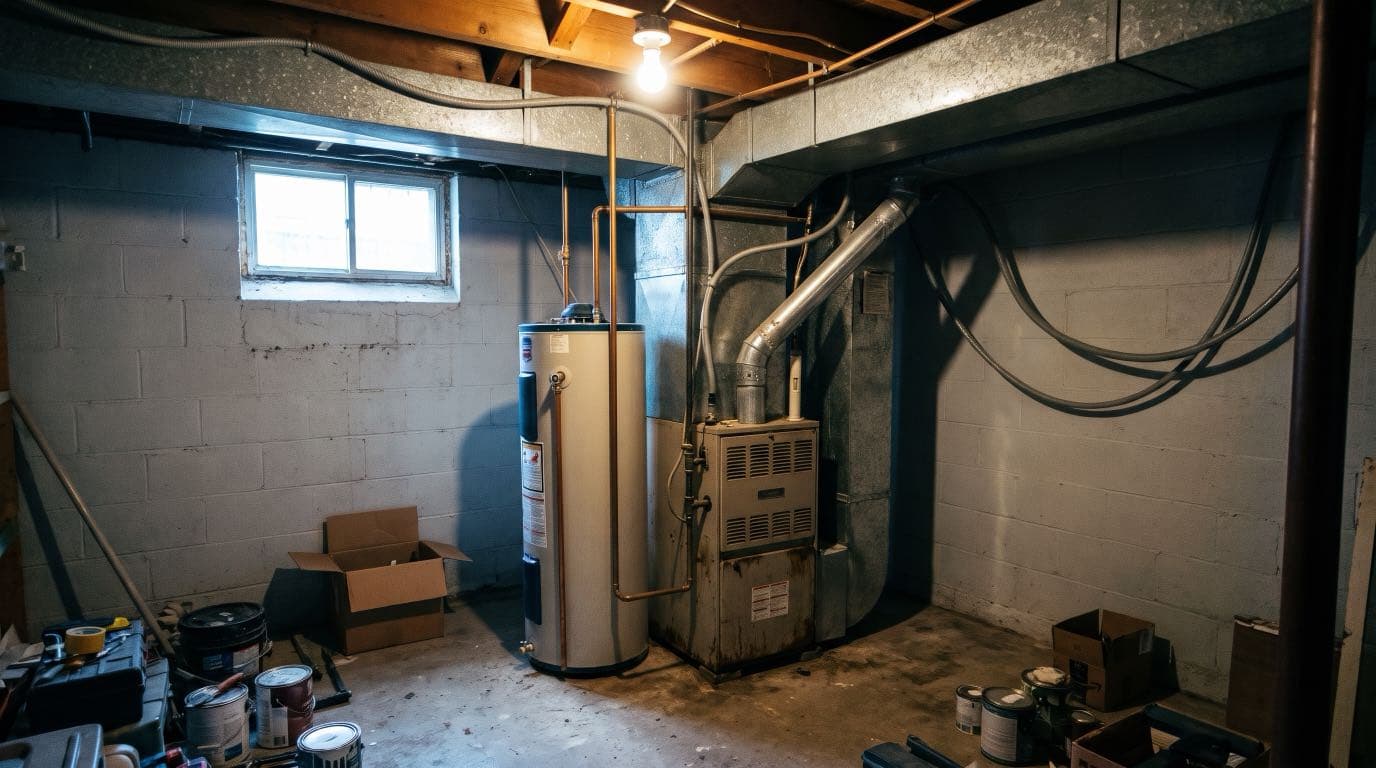
A water heater, a furnace and an air conditioner can each be owned outright or rented on a long-term contract, and from the basement doorway they look identical. The difference does not show up in the equipment. It shows up in the paperwork, and usually late.
An owned unit simply transfers with the house, like the roof. A rented one is a continuing agreement with a company that is not party to your purchase at all, and somebody has to decide what happens to that agreement on the day the house changes hands.
The difference does not show up in the equipment. It shows up in the paperwork, and usually late.
What changed on title in 2024
Rentals of this kind used to be backed by a notice registered against the property itself, which a buyer would discover during a title search. That changed. The Homeowner Protection Act, 2024 came into force on June 6, 2024, and under it notices of security interest in respect of collateral that is consumer goods may no longer be registered in the Land Registry.
Consumer goods are defined in the governing statute as goods used or acquired for use primarily for personal, family or household purposes, which is what a household water heater is. Notices of that kind which were already registered are deemed to have expired, and a solicitor can apply to have one deleted, using a prescribed application and a law statement confirming the notice was for consumer goods.
| Question | Position now |
|---|---|
| Can a new one be registered against the property | No, not where the collateral is consumer goods |
| What about ones registered before the Act | Deemed to have expired |
| How does one come off title | By registered application, with a solicitor law statement |
| Does this reach non-consumer notices | No, those may still be registered, with a law statement |
| Does any of it change the rental agreement | The bulletins do not address the agreement at all |
What the change does not do
This is where a lot of what has been written about the subject goes wrong, and it is worth being precise. The documents that describe the change are land registration bulletins. They tell a solicitor what may and may not be registered against a property and how to remove something that is already there.
They do not say anything about the rental agreement. Nothing in them cancels a contract, releases anyone from it, or decides who pays what. A reader who concludes from the headlines that the agreement itself disappeared has read a land registry instruction as though it were contract law, and that is a question for a real estate lawyer rather than for a REALTOR®.
Where this gets settled
In practice the question is answered in the offer, on the inclusions and exclusions, and it has two ordinary outcomes. Either the buyer agrees to assume the contract and continue it, or the seller agrees to buy it out before closing so the house arrives without it. Both are normal, and which one happens is negotiated rather than assumed.
What causes trouble is leaving it unaddressed, so that it surfaces while the lawyers are exchanging documents and there is no time left to trade anything for it. Establish it during the condition period, decide which outcome you want, and write it down.
Written by
Robin PatelSalesperson · The Agency Toronto
Updated
Published
Read in your language
A machine translation, not Robin’s words. For anything that decides money, ask him in Gujarati or Hindi directly.