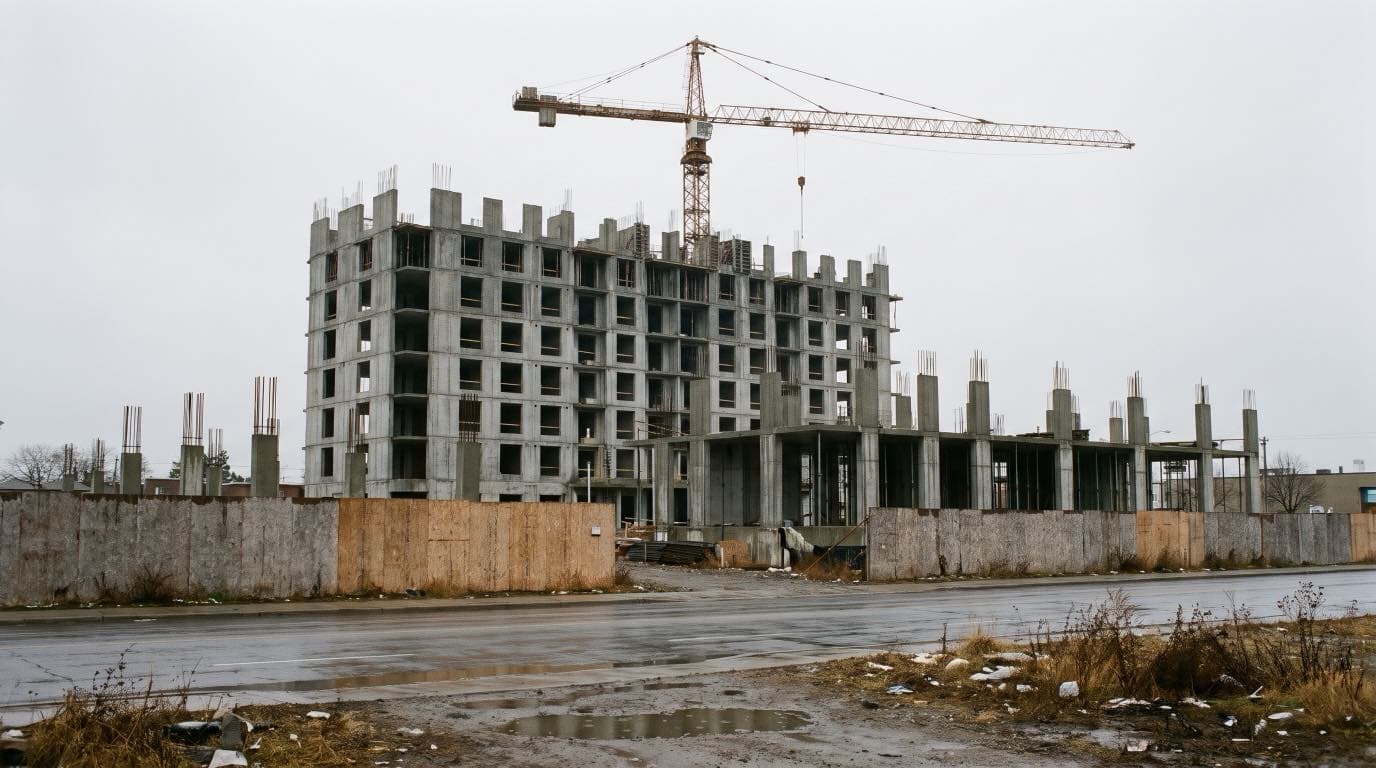
What happens to my deposit if the builder cancels the project?
Buyers assume a cancelled project means an automatic refund from the warranty programme. The provision that governs it never uses the word cancelled, and that difference decides the claim.
The short answer
There is a guarantee fund, but cancellation is not itself the trigger. The Act pays out where the buyer exercised a statutory right to rescind before closing, or where title did not transfer because the vendor went bankrupt or fundamentally breached the agreement. Robin Patel, a REALTOR® in the Greater Toronto Area, raises this before you sign.
Written forBuyers in the GTA who have paid deposits on a pre-construction home or condominium and have heard the project may not proceed, and anyone deciding how much to put down on a new build.
The short version
- A purchaser may be entitled to payment out of the guarantee fund for a deposit or other payment credited to the purchase price on closing.
- The entitlement arises where the purchaser exercised a statutory right to rescind before closing, or where title did not transfer because the vendor went bankrupt or fundamentally breached the agreement.
- Cancellation is not a trigger in its own right. A cancelled project has to fall inside one of those situations, which is a legal question about the particular agreement.
- The provision is expressly subject to the regulations, which is where the monetary limit on deposit protection is set rather than in the section itself.
- Separate heads of the same section cover failure to substantially perform a construction contract, breach of warranty, and major structural defects.
The belief, and the provision
The common understanding runs like this: deposits on a new build are protected, so if the builder cancels the project the warranty programme sends the money back. The first half is broadly right and the second half is where claims come apart.
The governing provision sets out when a purchaser is entitled to receive payment out of the guarantee fund for a deposit or other payment to be credited to the purchase price on closing, and it names the situations precisely. Cancellation is not one of the words it uses.
The first half is broadly right and the second half is where claims come apart.
The three situations the Act names
Read as a list, the provision has one doorway on the buyer's side and two on the vendor's. The first is that the purchaser has exercised a statutory right to rescind the purchase agreement before closing. That depends on such a right existing and on it having been exercised in time.
The other two both begin from the same fact, that title to the home has not been transferred to the purchaser, and require a cause of action against the vendor because the vendor has gone into bankruptcy, or because the vendor has fundamentally breached the purchase agreement. A cancelled project usually has to be argued into the second of those, and whether it fits is about the agreement rather than about the announcement.
| Situation | What the Act requires |
|---|---|
| Buyer rescinds | A statutory right to rescind the purchase agreement, exercised before closing |
| Vendor bankruptcy | Title not transferred, and a cause of action against the vendor, because the vendor has gone into bankruptcy |
| Fundamental breach | Title not transferred, and a cause of action against the vendor, because the vendor has fundamentally breached the purchase agreement |
| How much | The provision is subject to the regulations, where the limit is set |
| Other heads | Separate provisions cover failure to substantially perform a construction contract, breach of warranty, and major structural defects |
The part that happens before you sign
One of the three doorways is a right to rescind, and a right has to exist before it can be exercised. That makes the agreement itself the thing to examine at the outset, rather than the document you dig out once a project is in trouble.
So the useful sequence is the unglamorous one. Have your lawyer read the purchase agreement before you sign it, understand what rights it gives you and what the deadlines are, and treat the deposit schedule as a risk decision rather than a formality, because the protection has a ceiling set elsewhere.
If the project is already in trouble
Keep everything and date it. Which doorway applies turns on facts such as whether title was ever going to transfer, what the vendor actually did, and what the agreement said, so the paperwork trail is the case rather than a background to it.
Then get advice early rather than waiting for an announcement to be made official. Two of the three situations in the provision require a cause of action against the vendor, and that is a legal conclusion a lawyer reaches about your agreement. It is not something a REALTOR® can decide for you.
Written by
Robin PatelSalesperson · The Agency Toronto
Updated
Published
Read in your language
A machine translation, not Robin’s words. For anything that decides money, ask him in Gujarati or Hindi directly.